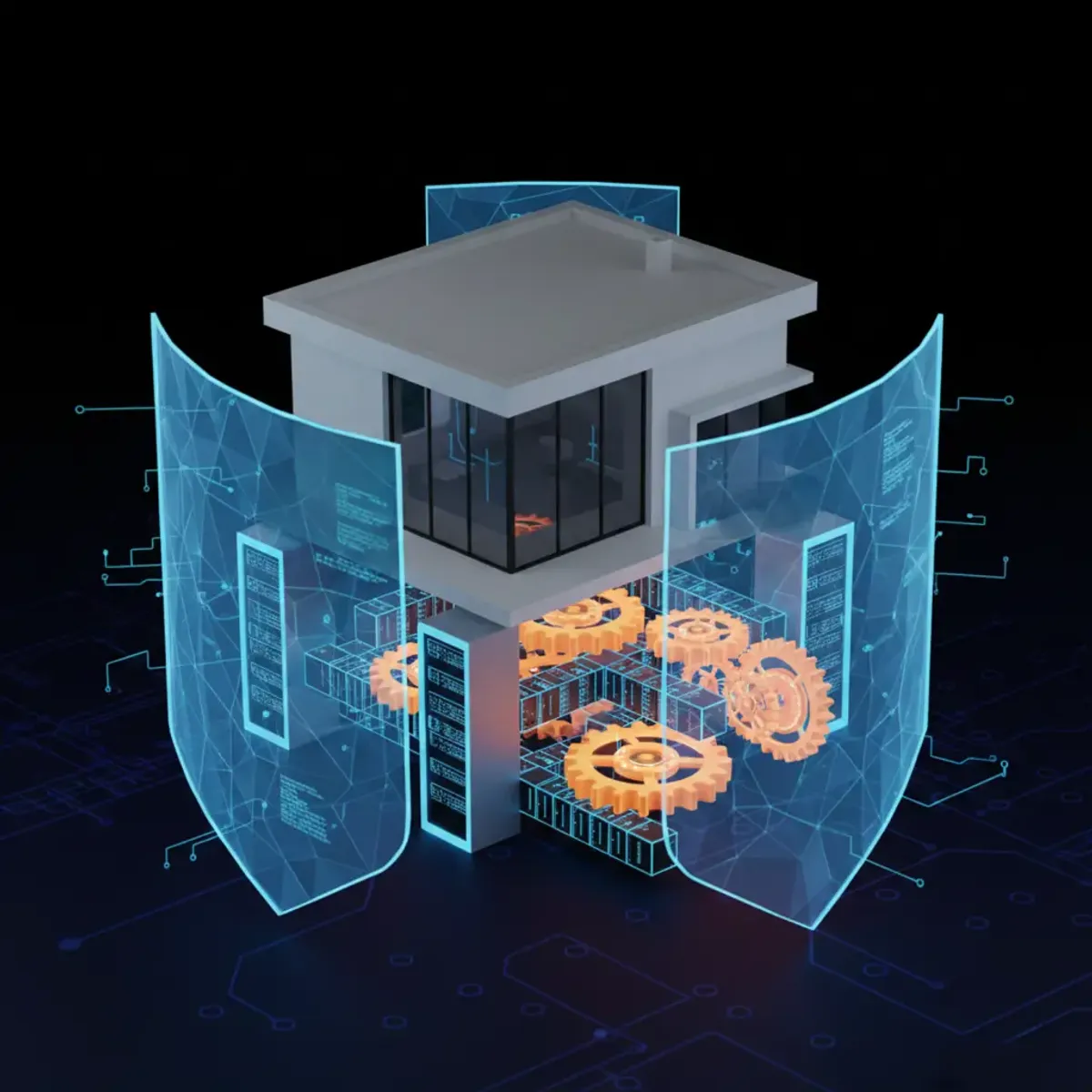
Imagine you’ve built your dream house. Can you forget about it after moving in? If you stop mowing the lawn, fixing leaks, and paying for power, the house will quickly fall into ruin.
A website is your digital home. The moment of launch (deployment) is not the finish line—it’s just the beginning. To keep your site fast and secure, it needs constant care.
In this article:
- Digital Entropy: What Breaks Over Time
- Security: The Invisible Shield for Your Business
- DevOps: Growing Your Site Without Breaking It
- Hosting: Why VPS Beats Shared Hosting
1. The Illusion of “Set It and Forget It”
If a website isn’t maintained, digital entropy takes over:
- Obsolete Tech: Browsers update, and Google’s speed requirements (Core Web Vitals) evolve.
- Security Holes: Hackers discover new vulnerabilities in servers and CMS platforms daily.
- Stale Content: Last year’s promotions on your homepage tell customers: “This business is abandoned.”
2. Security: Protecting Your Assets
Your website is a sales tool. We ensure protection on multiple levels:
- Regular Updates: We patch security holes in system components.
- Rule 3-2-1 Backups: A backup strategy ensuring your data is always safe. Read more on CRM security.
- 24/7 Monitoring: Automated systems check your site’s availability every minute.
3. DevOps: A Culture of Development
As your business grows, your site needs new features: calculators, integrations, new sections. Following our development principles, we use a DevOps stack:
- Docker: Isolates the application so it runs consistently everywhere.
- CI/CD: An automated build pipeline. Every change is tested before going live, preventing site crashes during updates.
4. Hosting: The Foundation Matters
Saving money on $2 “shared hosting” is a mistake. You share resources with thousands of neighbors. If a neighbor is attacked, your site lags too.
We use VPS (Virtual Private Servers)—your private digital apartment:
- All resources (RAM, CPU) are yours alone.
- Full security control.
- Stable load speeds, critical for conversion rates.
Expert Insight: When choosing technical support, you aren’t buying “developer hours”—you’re buying the stability of your primary sales channel.
Summary
A website is a living organism. Look for a technical partner who understands architecture and is ready for a long-term commitment, not just a one-time contractor.
Does your website need a professional check-up? Message me—I’ll perform a technical audit of your current project’s performance and security.
Read also: How avpdev.com was built — Case Study